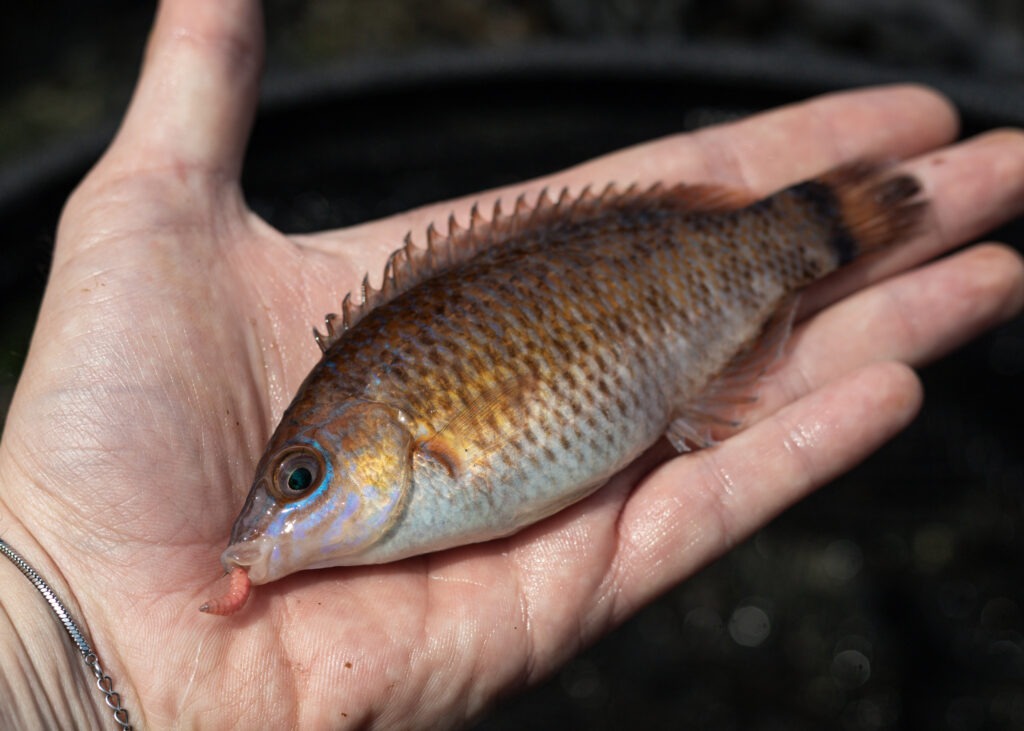
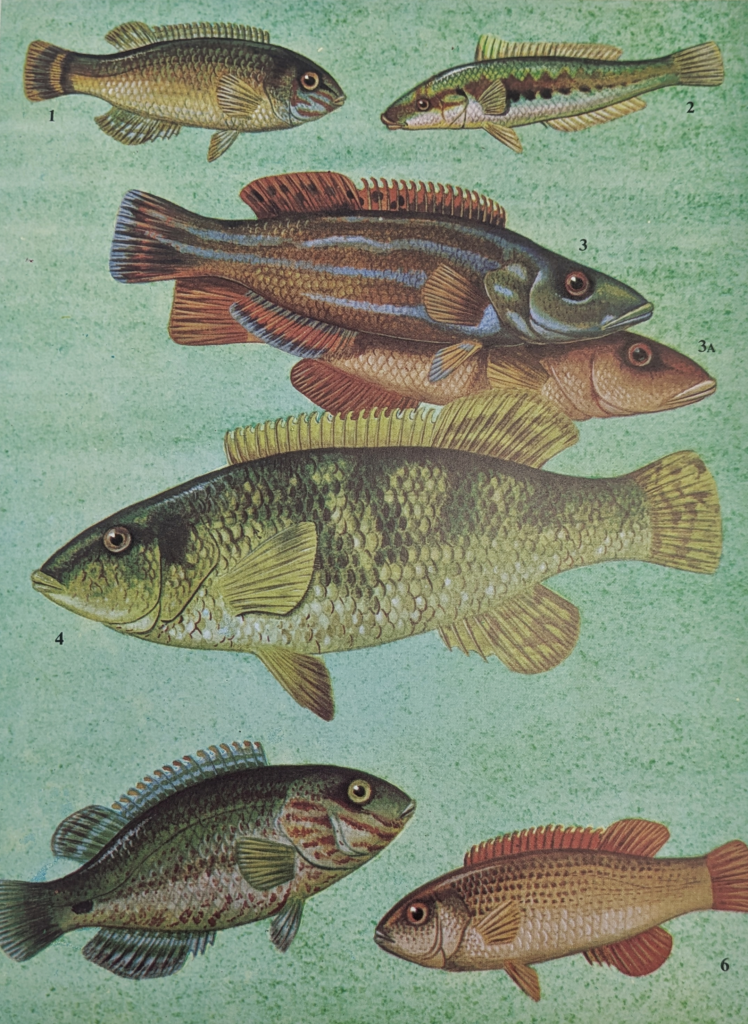
In my very biased opinion, wrasse are easily the most exciting group of fish found around our UK coastline. They’re colourful, charismatic, and ridiculously fun to fish for. You can catch them from a wide range of places, on a number of tactics. This UK wrasse species guide covers identification, sizes and key features of the wrasse you’re most likely to encounter – to help you better tell them apart, and ultimately catch a few of them.
What are wrasse?
Wrasse are a family of reef-dwelling fish that thrive around rocky ground, weed beds and broken coastline. Globally, there’s more than 600 species in the wrasse family (Labridae) – and some of them are absolute giants, like the Humphead wrasse. In the UK, we’ve six species of wrasse: the ballan, corkwing, cuckoo, goldsinny, rock cook and Baillon’s. Around the UK, these fish are most common along the south and west coasts, but they can be caught in any place which offers structure, really – from and not just in the obvious places (the southwest, west Wales and Scotland). They don’t live exclusively in the rocky stuff, either, and are perfectly happy living in the manmade structure provided by harbours and piers. In these sorts of places, they undoubtedly rule the roost.
They are known for:
- Bright, varying colours and patterns
- Being intersex, and generally long-lived
- Strong territorial behaviour, especially around breeding time
- Living tight to structure – the rougher the better!
- Fighting incredibly hard for their size, owing to their muscular frames
For anglers, this makes specimen wrasse fishing in the UK a challenging but rewarding pastime.
Like any family of closely related fish, identification can be confusing at first – especially when it comes to telling a e.g. big corkwing from a ballan, or Baillon’s from a corkwing – as there’s a bit of overlap in sizing. But once you’ve seen a few, the difference becomes obvious. In the meantime, a few simple rules help:
- Size matters: larger fish will always be ballan wrasse, or corkwing – but these fish can of course be small, too
- Look for markings: colour patterns and tail spots are key for corkwing and goldsinny
- Get to know the difference between males and females: as is obvious with people (generally!) sexual characteristics are obvious with wrasse. As a rule of thumb, males are bright and females are drab
- Body shape helps: stocky vs. slender makes identification easier – ballan and cuckoo are generally longer, as are goldsinny (proportionate to their size)
The Six UK Wrasse Species
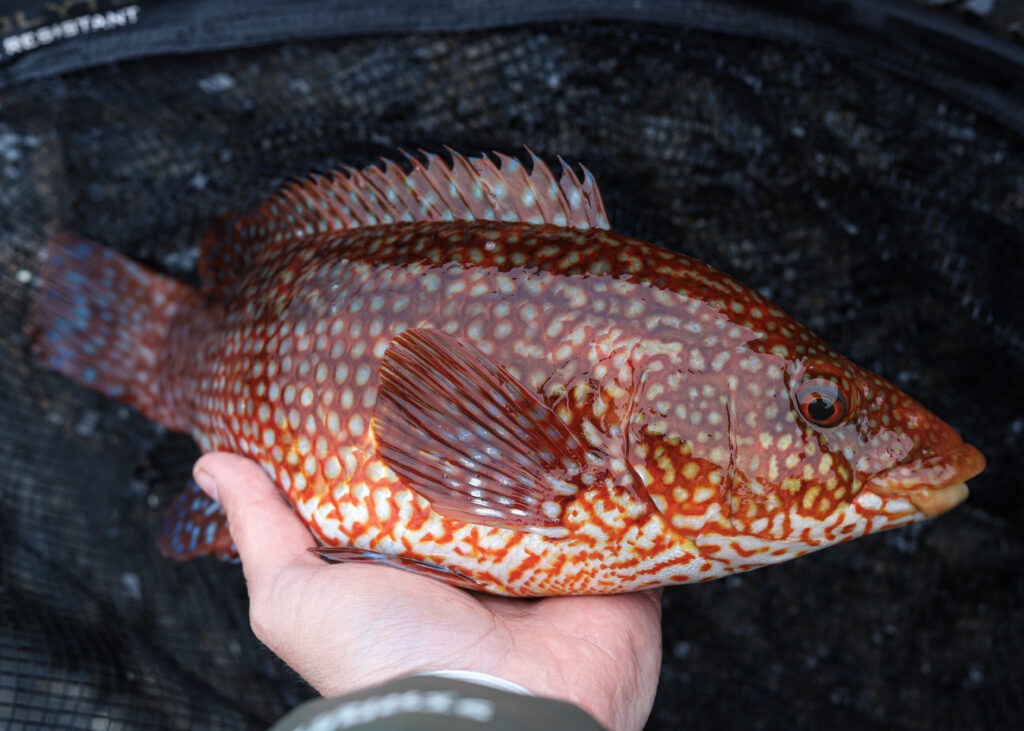
(1) Ballan Wrasse (Labrus bergylta)
My obvious favourite. The largest and most commonly fished for wrasse in UK waters, ballan wrasse are immensely powerful fish that terrorise rough ground.
The UK shore caught record stands at a stonking 9lb 1oz, caught by Pete Hegg off Pulpit Rock at Portland Bill, Dorset in 1998 – more than once have I looked at Pete Heggs’s catch photo in absolute awe. Wrasse of this size just don’t seem to exist these days, with a 6-7lb fish being an absolute monster. I rarely see pictures of British shore caught fish exceeding 6lb (even 5lb+ is uncommon) – and rarely outside of Cornwall, or e.g. the Channel Islands. There’s no doubt several reasons why there’s been a decline in specimen sizes in recent decades – all of them manmade, and probably foreseeable – but I think as anglers we need to make sure we treat these long-lived and ecologically important fish with the care and respect they deserve.
Size:
- Common: 0-2lb
- Good fish: 3-4lb
- Specimens: 5lb+
Identification:
- Thick, heavy-set body with a broad head
- Large, rubbery lips – and a fine set of white gnashers, which are invariably more worn down in older specimens
- Their colour varies widely; from greens to browns, oranges to reds, to blacks, from mottled to speckled
- There are actually two phenotypes of ballan wrasse: spotted and plain. I used to think that big males are only ever spotted and highly colourful, but that isn’t always the case – it’s just that the bright and spotted colour morph is more likely to reach a specimen size
- Juvenile wrasses tend to be either an emerald green in colour, or drabber browns – as younger fish will always be females
These guys and girls can be caught from between kelp beds, gulleys, rocky ground, or close to structure. They’ll eat a wide range of baits and lures. Their natural diet is composed of molluscs, crustaceans and small fish – which they make light work of with their strong jaws and crushing teeth – so for baits think limpets, prawns and crab.
Check out my other guide ‘How to Catch Big Ballan Wrasse in the UK’ if you’d like to target specimens, specifically.
(2) Corkwing Wrasse (Symphodus melops)
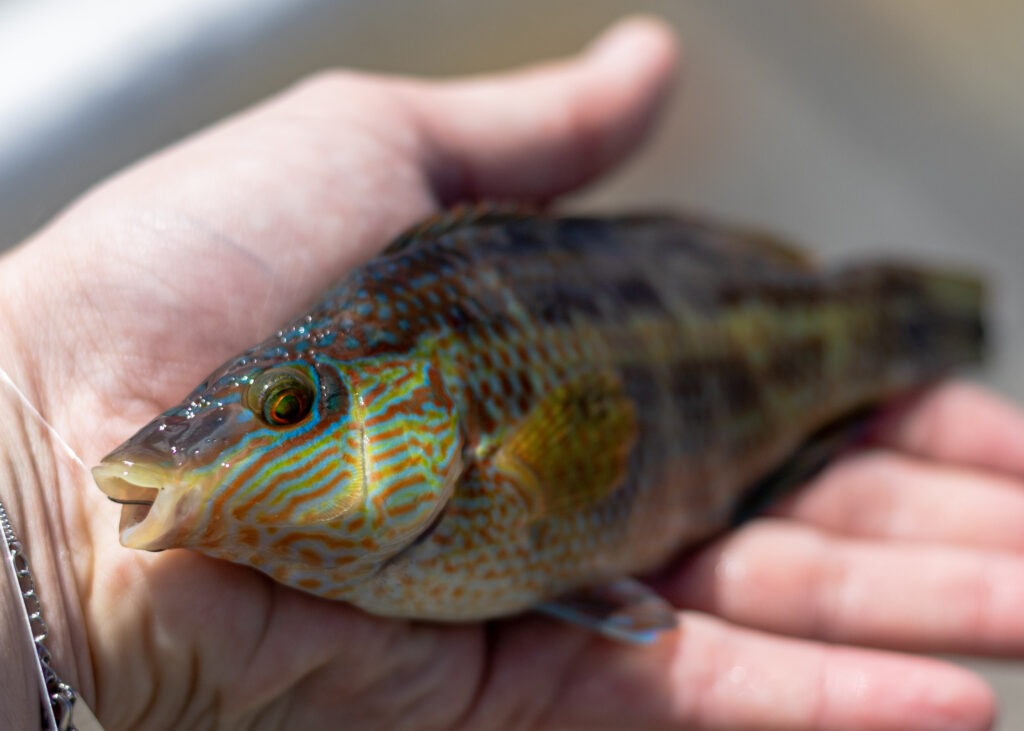
The corkwing or ‘corkie’ is a common and aggressive inshore species. The clear cheeky chappy of all UK wrasse species, and they’re often the first wrasse a sea angler encounters.
Size:
- Common: 0.5–1lb
- Larger fish: 1–2lb
Identification:
- A stockier build compared to other smaller wrasse – big corkies are little lumps!
- Key: is the distinct black “thumbprint” spot at the base of the tail
- Males often display brighter facial markings – which will be either bright green, teal, or electric blue
- But corkies are generally a drab green or rusty brown, with blue or green highlights – they’re rarely light in colour, like a Baillon’s
These guys are incredible fun on Light Rock Fishing (LRF) gear and will take all sorts of artificial worms (think Marukyu Isome, Berkly Gulp! and Angle Worm) aswell as micro-creature baits rigged up on cheb rigs. A firm favourite of family holidays. Bait wise, rag and lugworm are the baits for corkwing wrasse, and a couple quids worth of either will keep your rod tip tapping all day long. Worm baits should be fished near the deck under a float, or on a short scratching rig.
(3) Goldsinny Wrasse (Ctenolabrus rupestris)
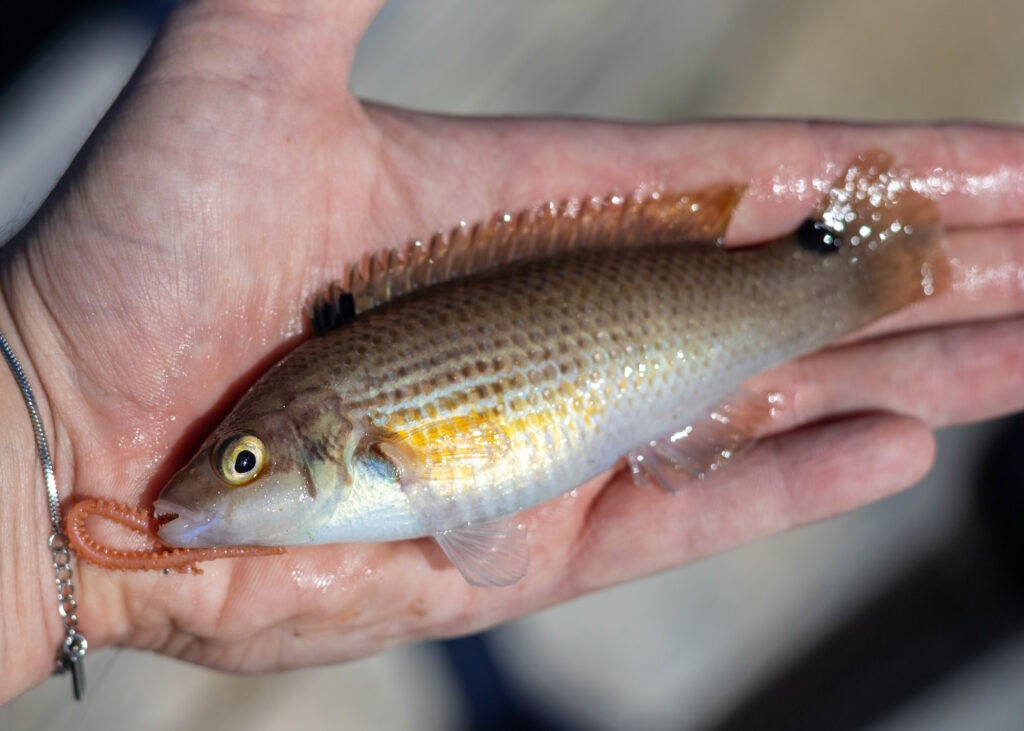
Small and fairly common. Goldsinny wrasse can be caught when light rock fishing, but I suspect they’re caught far less than their actual numbers would suggest – as you can never catch one, when you actually want one!
Size:
- Common: a few ounces
- Rarely exceed: 0.5lb
Identification:
- Slim, elongated body
- A dusty gold sheen or brown colour, generally – though I’ve seen pictures of these guys looking reddy brown and even blue-ish
- Champagne coloured eyes. A lighter belly, with gold tints around the pectorals
- Small mouth, with fine and slightly protruding teeth
- Limited markings. Two single dark spots; one at the top base of the tail, aswell as one at the front of the dorsal
These guys adore a couple cm of Marukyu Isome in a small size, camo, pink or brown colour, fished on a dropshot rig tied with a twisted or snooded loop.
(4) Cuckoo Wrasse (Labrus mixtus)
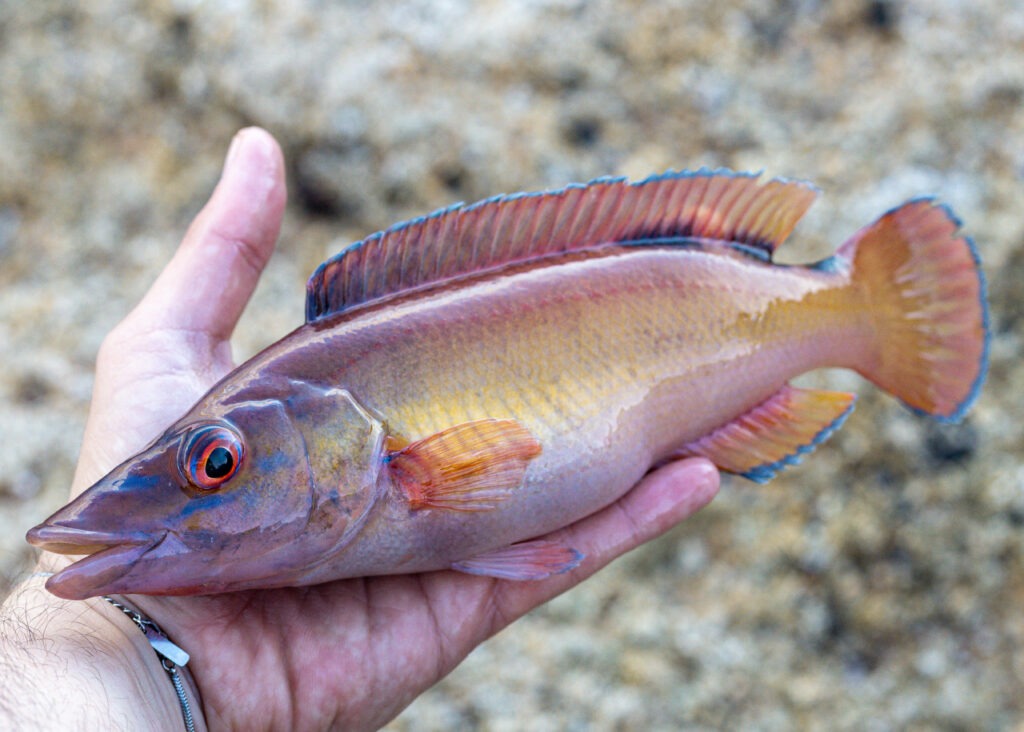
No questions asked, easily one of the most visually striking fish in UK waters; the cuckoo wrasse is well regarded by sea anglers. Thankfully, they’re probably the easiest to tell apart from the rest of the UK wrasse species – who are all, undoubtedly, a little chunkier.
Size:
- Common: 0-1lb
- Larger fish: 2lb+
Identification:
- These fish are just eye meltingly beautiful;
- Males: vivid orange or yellow body, with electric blue/grey head and markings that run down the body – bright blue highlights on the fins are common
- Females: peachy pinks and orange, and a smaller size. Have three black splodges at the end of the dorsal, which run towards the wrist of the tail
- A sleek body shape with a smaller head than the ballan. Likewise, a narrower wrist of the tail and a more elongated head and mouth
- Cuckoos are also easily identified by their home, as they have a strong (but not exclusive) preference for deep water
These guys can be caught over slightly cleaner ground than the ballan wrasse, and they are perhaps a little more partial to jigs (metal or plastic) than other wrasse species. Whilst I have seen cuckoo wrasse in silly shallow water, they are very much a deepwater species – so think 20 feet plus for targeting them reliably. Being a deep-water species they require care and a slow retrieve, or they often won’t ‘return’ well. The steep and rocky drop-offs of the southern coast of west Cornwall are a particular stronghold for them.
(5) Baillon’s Wrasse (Symphodus bailloni)
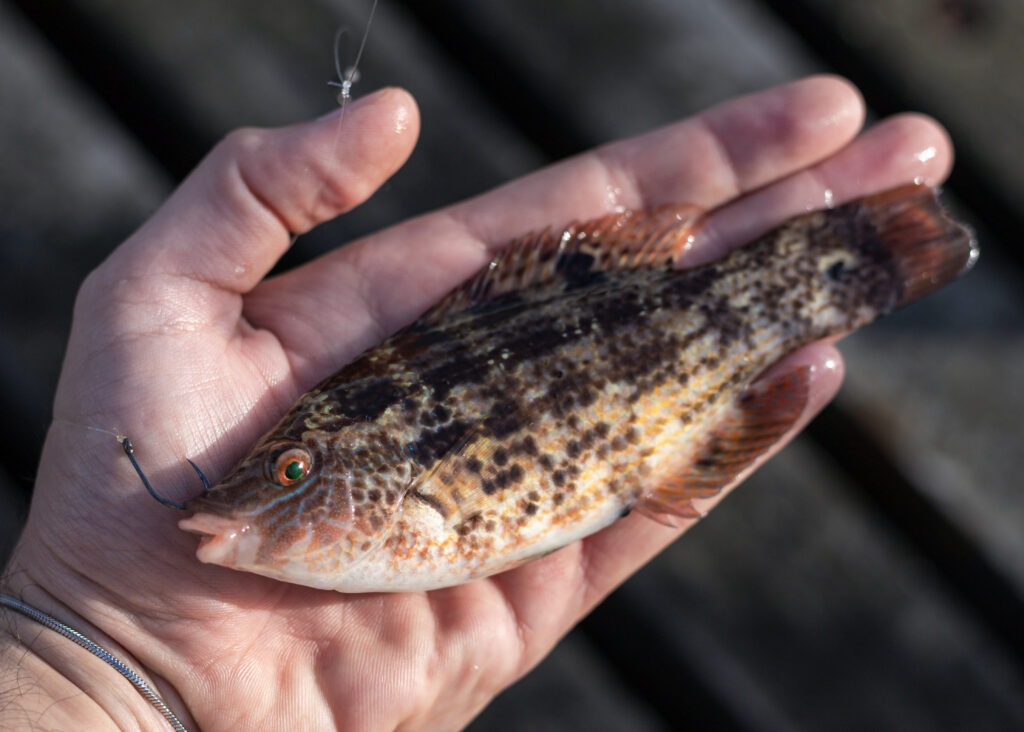
Very similar to the corkwing in size and shape, but with subtly different colouration. Apparently, Baillon’s wrasse are more distinctive under the water than out of it! Very catchable on LRF gear (dropshots, cheb rigs) and worm baits such as ragworm.
Size:
- Common: a few ounces
- Occasionally: approaching 0.5lb
Identification:
- Splotchy colouring – with beige/brown highlights, and walnut brown darker patches. These dark splodges are all over the body and in a somewhat even distribution
- Two black spots on the base of the dorsal – one bigger one 2/3 of the way down the dorsal, and one small one on the outer bottom edge of the end of the dorsal
- On males: the peachy red fins are a dead giveaway. Facial streaks are present but generally subtler than a corkwing – and are a light blue, rather than green or deep blue
Key ID tip: Compared to a corkie, the Baillon’s is a little more “washed out”. Its body colour is paler and more of a peachy/beige – with higher contrast between the lighter tones and the deep brown splotching along it’s flank (whereas a corkwing is more of a greeny red, with lower contrast between tones). The peachy red fin colouration and blue facial streaks are another dead giveaway.
These guys are absent from certain areas of the country, appearing to be very localised – most likely outcompeted by ballan or corkwing, I suspect. The south coast around Swanage seems to be a particular hotpot for them, but I have also caught them in Weymouth.
(6) Rock Cook Wrasse (Centrolabrus exoletus)
Last but not least, the most incredible little thing in a small package; a true palm sized jewel. The pocket-sized rocket of the UK wrasse family. Small, colourful, and fairly common around shallower rough ground and harbours – but again, highly localised.
Size:
• Rarely exceeding: a couple of ounces
Identification:
- Small, chunky body – stouter than a goldsinny, and more like a corkwing in proportion
- Equally small mouth, relative to size, and complete with tiny little teeth
- Females: typically, a peachy brown in colour, with light mottling. Subtle sparkling blue markings under the eyes and across the cheeks
- Males: petrol blue or turquoise lines radiating from the eyes, across the cheek. Incredible blue all across the base of the dorsal, and similar enamelling all across the flank
Often encountered when targeting areas around e.g. Devon and Cornwall with a general LRF approach. Brixham, Devon, is a noteworthy hangout of the Rock cook wrasse. They’re inquisitive little fish who feed on small invertebrates; the way they feed can, at times, almost seem like grazing. Because of their small mouths, small baits and hooks (size 20+) are needed. A few mm of Small Marukyu Isome (in brown, camo, natural or green) seems to be the favourite way of species hunters to target these. I’ve only ever caught them on red maggot – once, whilst in Devon – which is absolute sacrilege to LRF enthusiasts, so don’t tell them!