Catching wrasse is one thing, but targeting and catching big ballan wrasse in the UK – anything over 4lb in size, these days – is a different challenge altogether. These fish are powerful, territorial, and live in unforgiving rocky ground, which means refining your approach is essential if you want to consistently land larger specimens.
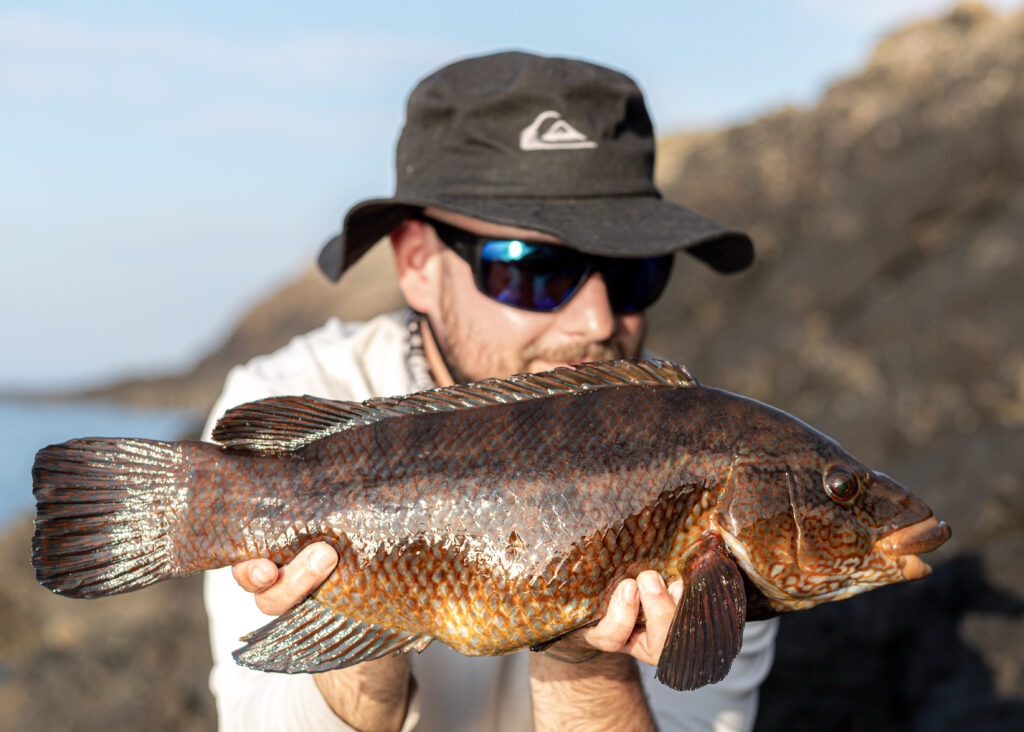
Over the last five or so years, I’ve found that a few small adjustments to how you fish for ballan wrasse can make a huge difference when targeting better fish. Both improving your odds of landing them, aswell as losing less tackle… It’s daft, but as time has gone on, my tackle has only gotten stronger!
Where to find big ballan wrasse:
Big wrasse don’t tend to lurk in easy-to-fish areas. Instead, they favour:
- Heavy, rough ground with deep kelp and weed beds
- Boulder fields, undercuts, and vertical rock faces
- Marks which stay wet through all stages of the tide – depth isn’t essential, but it can help
- Marks which are properly out in the sticks, and will have you sweating your socks off to get to them
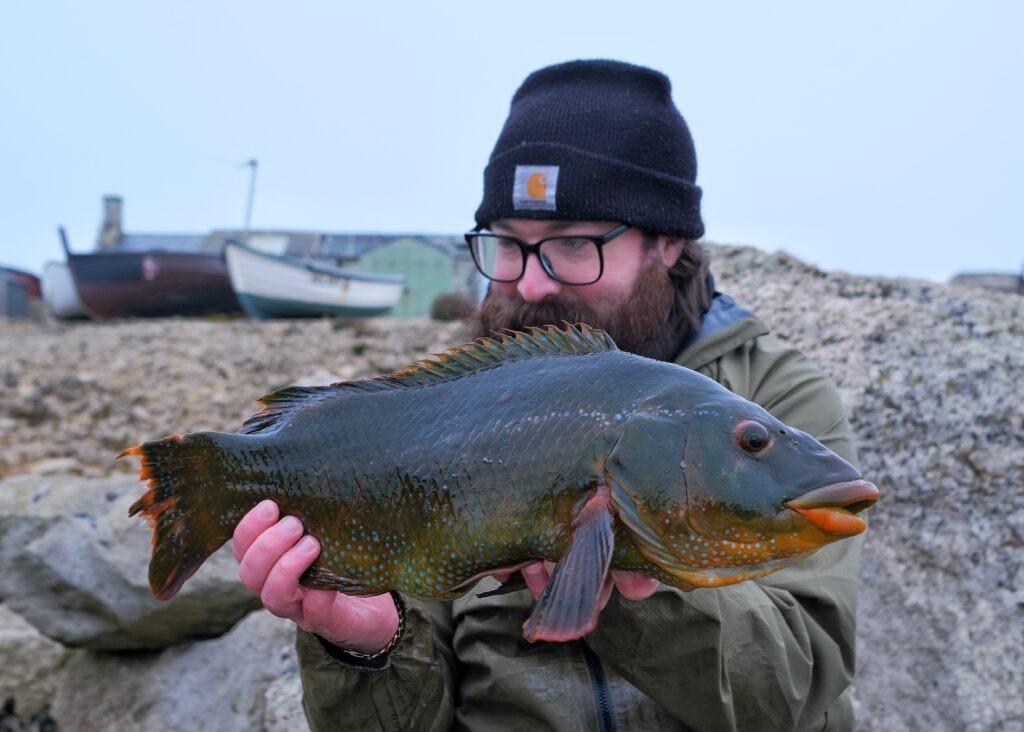
In many cases, the harder the mark is to access, the better it can be. The fishing pressure is lower and the fish are less cautious. Much like your freshwater pike, or perch, or even carp, I’m a big believer that big ballan wrasse completely thrive on neglect. They’re stout buggers, no doubt about it, but they’re very sensitive to poor angling and rough handling – given that they’re so long lived, it doesn’t take much to really dent a localised population. So, if you’re serious about catching big ballan wrasse around the UK, locating the right ground is surely half the battle. Google Maps is your very best friend, in this endeavour.

Best rigs and tackle for big ballans
I am firmly and unashamedly in my ‘big bait era’ when it comes to wrasse fishing. Soft plastics catch good fish, undoubtedly, but I just think that a hardback crab – fished either on or just off the deck, or under a float, is so selective for the bruisers. And by using a rod a little stouter than your standard LRF outfit (say anything 60-100g in strength) you stand a significantly increased chance of stopping a big ballan in its tracks. Tackle choice is, therefore, critical.
A typical setup might include:
- A medium/stout (but sensitive) rod capable of casting 2-4oz
- 30lb+ braid mainline
- 20–30lb fluorocarbon hooklength
- Size 1 to 1/0 Chinu hooks
Simple rigs often work best:
- Running ledger rigs
- Scratching rigs, tied with either a three-way swivel or a twisted paternoster/boom
- Sliding float rigs, set to fish a little off bottom
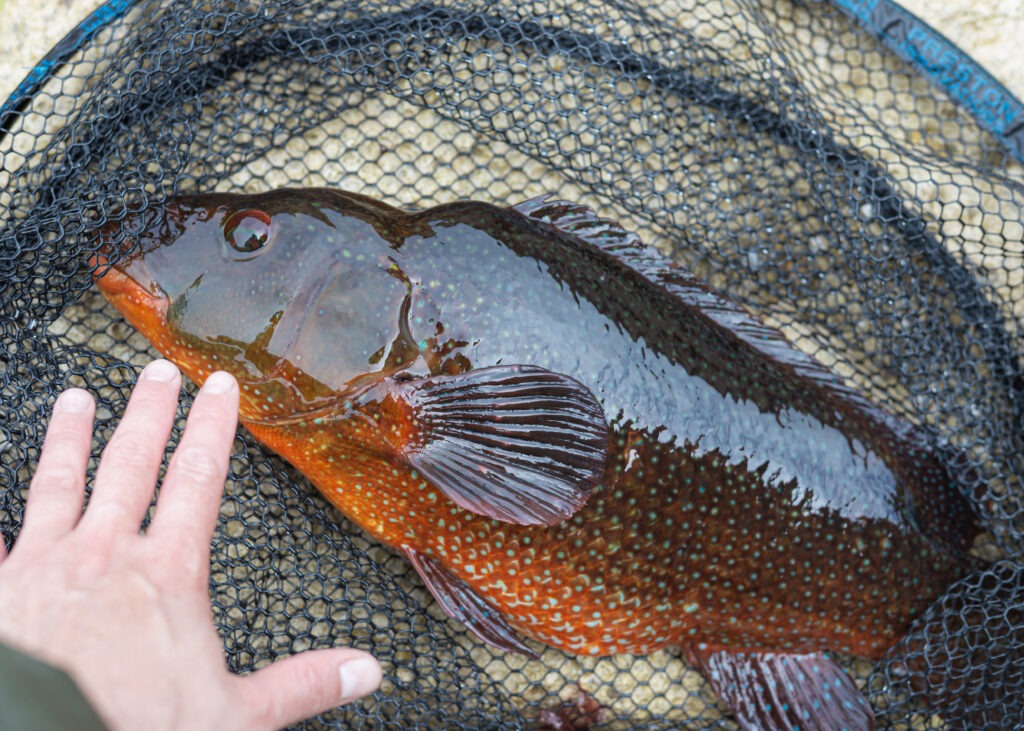
The key is keeping everything strong, simple, reliable – and both easily and quickly replaced. These days, I’ll even fish with a rock instead of a lead. It casts like a hot turd and looks utterly ridiculous (tied to the bottom of the rig by a piece of hemp string) but it’s significantly better for the environment… And rocks are free!
Playing and landing larger fish
From my experience, the initial run of a big ballan wrasse is where most wrasse are lost – 75% of the time, I’d say.
When a big wrasse takes:
- Strike firmly and immediately – no messing!
- Apply steady pressure and, unless your rod demands it, don’t give them any line
- Try to steer the fish away from snags, and quickly
Hesitation will always result in a lost fish, as their initial cover dives are mind-blowingly strong.
When it comes to netting – and please, always net a big wrasse – you want a long dog of a net handle. A drop net is essential when fishing higher marks, but for your ‘run of the mill’ rock fishing a telescopic net handle in 4-5m will do both you and the fish plenty of favours.
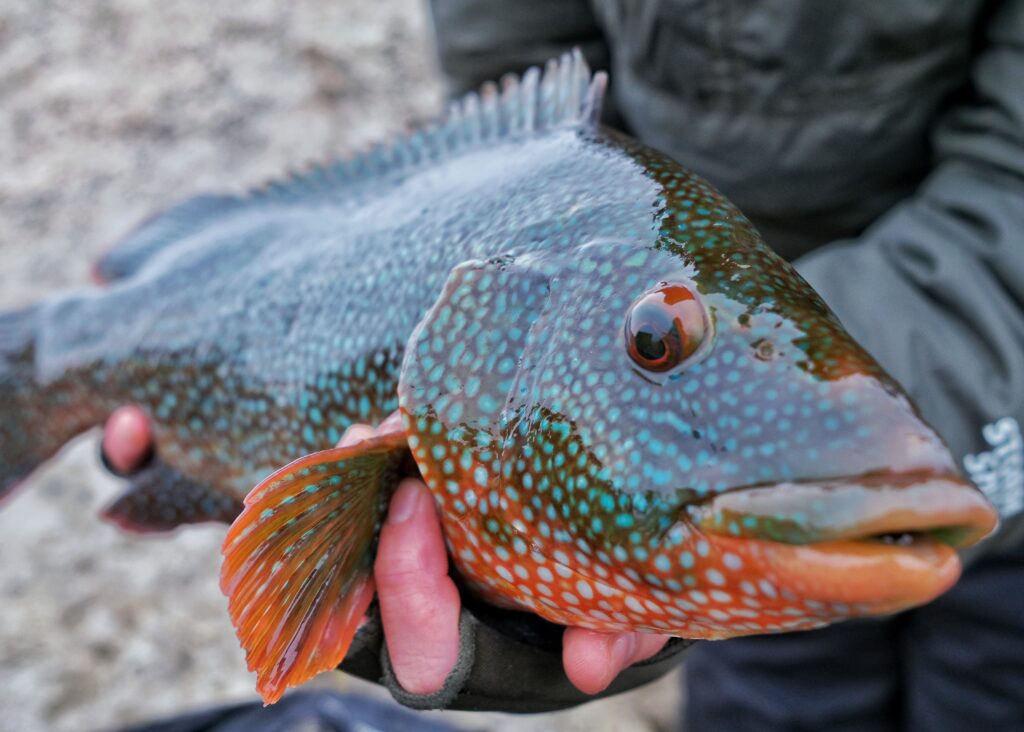
Getting to the point…
Successfully and regularly catching big ballan wrasse in the UK takes time – something I always wish I have more of – but it’s incredibly rewarding. By focusing on the right marks, learning them at different stages of the tide, and using strong tackle, fished tight to structure, you’ll quickly improve your chances of landing better fish. As with any fishing, it just takes both being there in the first place, aswell as a dollop of good luck, to get yourself going!
If you’re just getting started, feel free to check out my other simple guide called ‘UK Rock Fishing for Beginners’.